
Are Tennessee Mugshots Public?
No statewide Tennessee statute orders jails to put booking photos online. The photo itself is standard booking procedure. A public website is not the official record. Nor does any agency have to run a photo feed. Access turns on what record is held, who keeps it, and any law or court order limiting release. The Tennessee Public Records Act gives citizens a right to inspect public government records, subject to exceptions. A booking photo can be requested. Still, juvenile rules, an open investigation, protected details, or a court order can limit what gets released under laws like Tennessee Code § 10-7-504. A gap online proves nothing. The record can still exist.
Important. A booking photo documents a single arrest event. For the case outcome, the court record is the place to look.
Tennessee Mugshot Statute History
Tennessee Code Annotated § 8-4-115 sets the standard booking routine for arrests. It calls for a photograph, fingerprints, and an arrest report. A warrant or capias carries a state control number. The statute also spells out how a case moves toward disposition. The County Technical Assistance Service summary walks county officials through that workflow. Posting the photo online is another matter.
The real fight over publication came in 2021. Lawmakers filed HB1219 in the House and SB1297 in the Senate. Neither measure became law. The HB1219 bill text would have defined a mugshot and set follow-up duties after a favorable outcome. Removal when feasible, a ten-day window, and civil remedies were all written into the proposal. None of those duties binds anyone in Tennessee today.
The General Assembly subject index screenshot shows the legislative search page where these bills can be traced. Both measures are listed as introduced. That status matters. Proposed deadlines and remedies never became enforceable rights. No Tennessee appellate ruling imposes a pay-to-remove duty on private publishers.
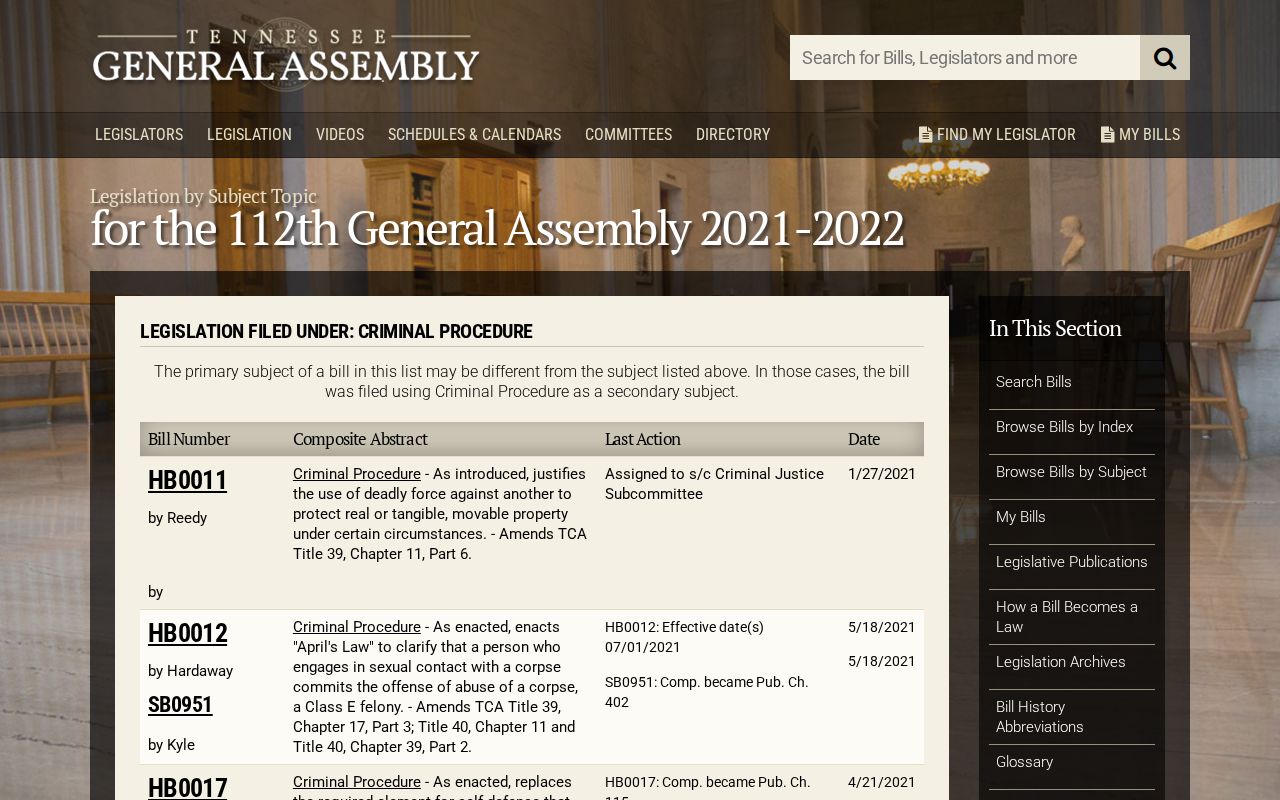
This is a proposal trail, not a statewide mugshot statute. Today's answer comes from public-records law, booking procedure, confidentiality rules, court orders, and agency policy.
Tennessee TPRA Photo Requests
The Comptroller's TPRA FAQ says citizens may inspect existing public records kept by state, county, or city offices. Photographs and electronic data count. Every agency must keep a public-records policy. That policy names a coordinator and explains requests, inspection, copies, and fees. Direct your ask to the office holding the record. Give a name or booking number if known, the arrest date range, the record type, and the arresting agency. Want to look but not own a copy? Ask to inspect first. For copies, the office may require its own form and charge authorized copy or labor costs, with an estimate where needed. The state records-request form is only a model. County or agency policy still controls, and the Comptroller's FAQ lays out the statewide access guidance, including how photographs and electronic records fit within TPRA.
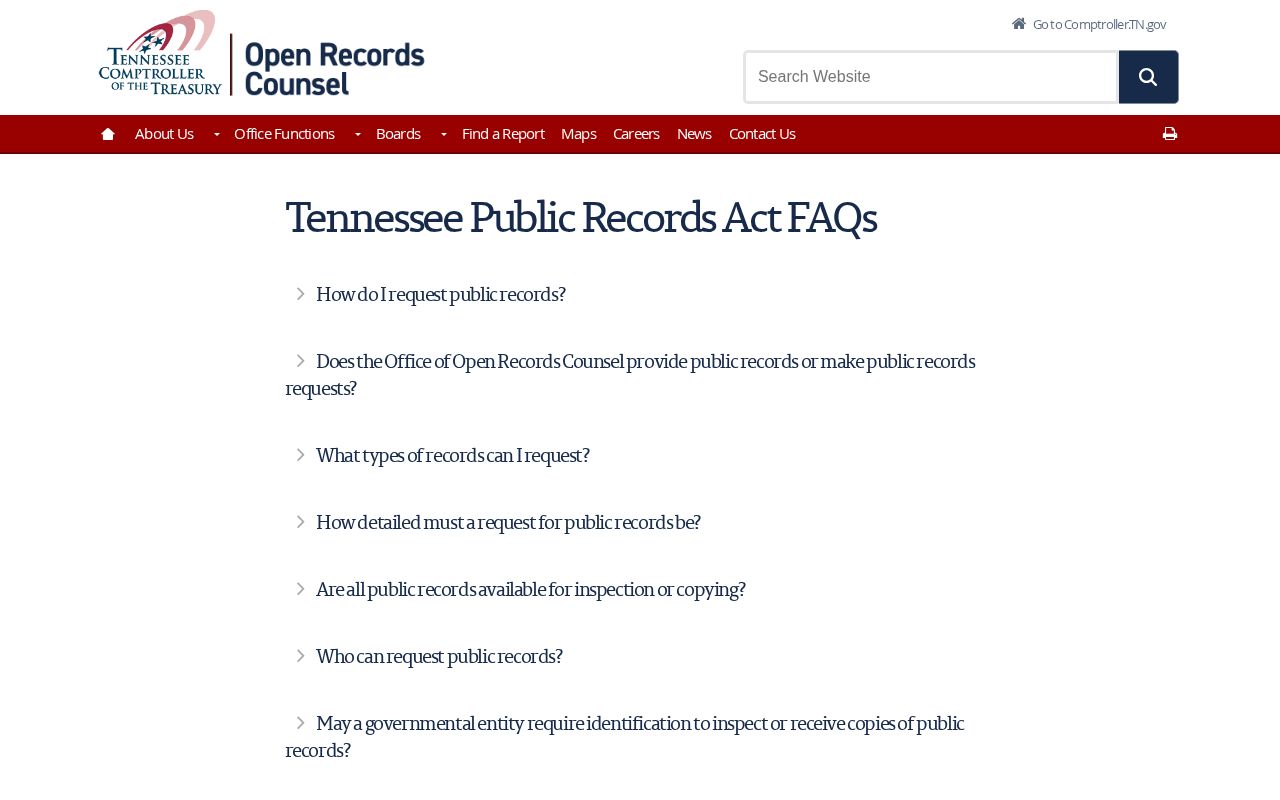
Name an existing record. A request should not ask an office to create a statewide list or decide what an arrest meant. If a record is withheld, keep the written answer and ask which law or policy applies.
- Name the person or booking number, the date range, and the agency that made or holds the record.
- Describe the record, such as the booking photograph, booking card, or arrest report.
- Ask to inspect the existing record, then request a copy if one is needed.
- Review any fee estimate or denial and ask the records coordinator to identify the rule used.
Note: A records office must locate an existing record, but it need not create a new statewide search result or answer an open-ended question.
Tennessee Juvenile Photo Rules
Juvenile booking photos skip the ordinary adult public-record path. Tennessee Code § 37-1-155 limits when a juvenile can be fingerprinted or photographed during a delinquency investigation. There is a narrow adult-felony-equivalent exception, plus other statutory conditions. Permission to take an image does not turn the law-enforcement file into an ordinary public mugshot page. Tennessee Code § 37-1-153 generally keeps juvenile court records private. Listed parties, officials, and people holding a legitimate interest can see them, subject to its exceptions. The two laws cover different files. One covers police fingerprint and photo records. The other covers juvenile court records. A third-party page cannot prove a young person was lawfully photographed. Nor can it prove a charge is public. Age unclear? Ask the agency custodian or juvenile court how the record is handled. Do not repeat a juvenile name or image from an unofficial page.
Note: Juvenile confidentiality is separate from adult expungement, and a vanished roster entry does not establish a court disposition.
Tennessee Arrest Record Retention
Keeping a record and posting it online are two different jobs. The CTAS Sheriff's Records Retention Schedule works as a statewide model for sheriffs. Under it, each document type forms its own record series. Arrest case files stand apart from identification files. Booking logs, inmate registers, and jail shift reports get separate treatment too. Every series carries its own retention rule. So a county may keep a booking log for years. It may never show it on the web. Local offices follow their own schedules. The model alone proves nothing about any single county's practice.
| Record series | What it covers | Schedule detail |
|---|---|---|
| 12-009 Identification Files | Fingerprints, photographs, measurements, and descriptions | Retain to death or a reasonable presumption of death, described as 100 years after birth, subject to schedule conditions |
| 12-010 Inmate Census / Booking Logs | Jail census and booking log records | Five years |
| 12-015 Inmate Registers / Jail Registers | Register of people held in jail | Permanent |
| 12-017(b) Jail Shift Reports | Shift-level jail record | Permanent |
Someone released from jail can drop off a current-inmates screen the same day. Yet the booking record itself still sits in the county file. The flip side holds too. A permanent register does not guarantee its photo stays online. Ask for the record series and its custodian instead. Do not treat an old web card as the archive.
Note: Retention rules describe how government files are kept, while a public roster can use a shorter display window.
Find Tennessee Booking Photos
Begin with the county sheriff or police agency behind the arrest. Check its jail roster or booking feed next. Tennessee county systems differ widely. Some post photo cards. Some offer a search form or PDF. Others have no public photo feed at all. State law creating a booking photo does not make county sites look alike.
When a roster comes up empty, request the booking record and photo from the custodian. A court file answers a different question entirely. It can show a plea, dismissal, acquittal, sentence, or expungement order. A roster, by contrast, tracks intake and custody. The statewide search path sits on the Tennessee arrest and booking records hub. County routing sits there too. For anyone sentenced to state custody, use the separate TDOC offender photo search. It is not a county booking feed.
A roster entry may be old, incomplete, or already stale. So treat no photo or charge label as current until you check the originating agency. If the case sits in a trial-level court, the county clerk or court can help. That office holds the disposition.
Tennessee Expungement Routes
Expungement in Tennessee never happens by itself. The Tennessee Bureau of Investigation's guidance covers diversions and expungements. It ties each route to the case outcome. Qualifying outcomes include acquittal, no true bill, nolle prosequi, dismissal, reversal, and successful pretrial or judicial diversion. Every route is subject to the law and the facts. Pretrial diversion sits under § 40-15-105. Judicial diversion sits under § 40-35-313. They are separate paths, and a result under one proves nothing about the other.
TBI says the person generally starts in the court where the case arose. Some requests cost nothing. These include requests based on dismissal, no true bill, nolle prosequi, or a not-guilty verdict. Diversion and conviction-related requests may bring clerk charges. The court and TBI guidance set the route. Neither a publisher's page nor a missing roster entry does. The TBI expungement page outlines the outcome-based routes and how orders move among agencies.
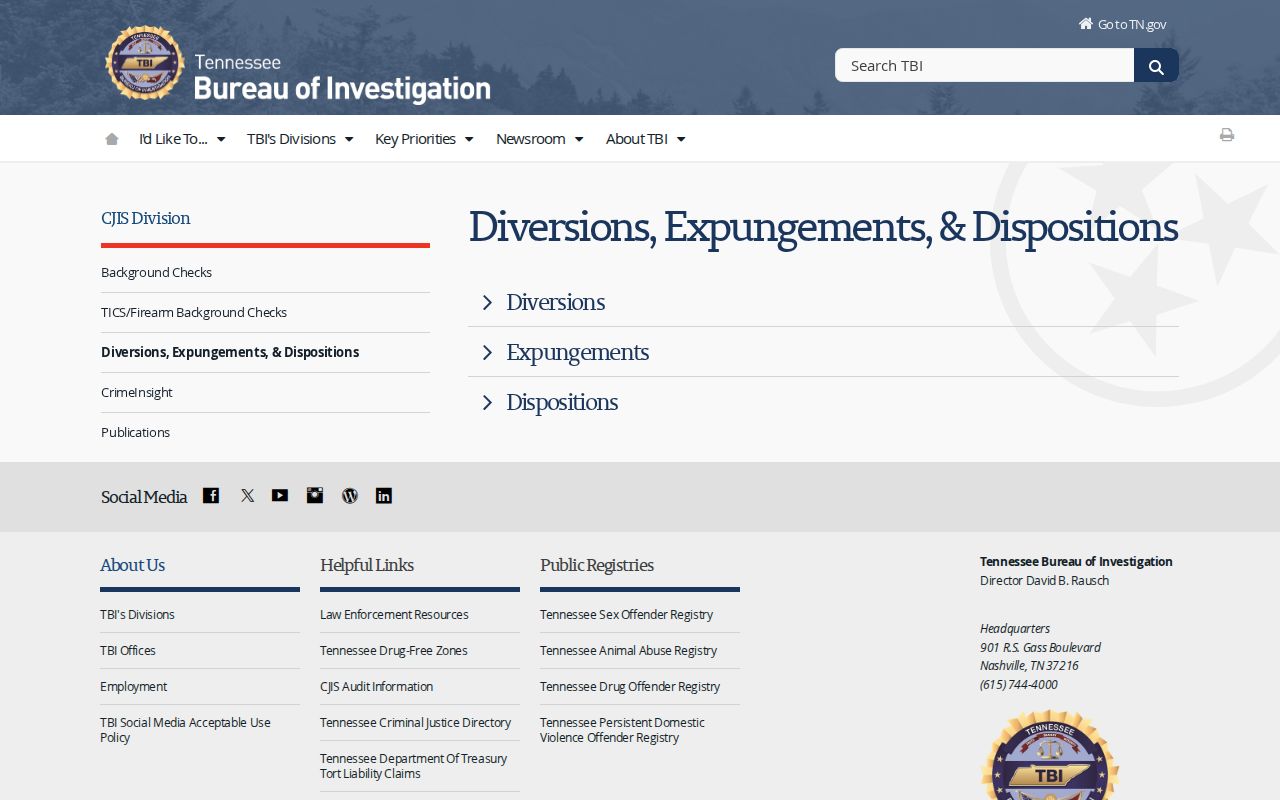
TBI posts an expungement order form plus a partial-removal form. Once a qualifying order is processed, TBI removes the charges and fingerprints from its state record. Copies elsewhere on the internet, though, do not vanish on the same schedule.
Note: A dismissal, acquittal, diversion completion, nolle prosequi, and expungement are distinct case outcomes with different legal effects.
Tennessee Conviction Expungement
Some convictions qualify for expungement under Tennessee Code § 40-32-107. Eligibility hinges on the exact offense, the sentence, prior record, and statutory exclusions. The law allows a one-offense route. It covers certain Class C, D, and E felonies and misdemeanors. The sentence must be fully complete first. The wait runs five years for an eligible misdemeanor or Class E felony. An eligible Class C or D felony takes ten years.
The statute also permits a route for no more than two eligible offenses. That means two misdemeanors, or one eligible felony plus one misdemeanor. The same five- and ten-year clocks apply by offense class. A prior expungement bars the route entirely. Special rules and later amendments can shift the result too.
These time periods promise nothing about any single charge. Check the current statute and TBI instructions, then ask the court that handled the case. A charge label alone hides the offense version. It also hides sentence completion and the prior record needed to judge eligibility.
Tennessee Records After Orders
A signed expungement or sealing order changes how the named records get handled officially. The order may need to reach several systems. These include the arresting agency, county jail, TDOC, TBI, and any other system holding the record. It is not a universal command. Private copies, social posts, and search results do not vanish on the spot. Keep a copy of the order. Track each source on its own. A practical sequence follows after that.
- Get the signed court order and confirm which charges and records it covers.
- Ask the court whether the order was sent to each agency or custodian that must act.
- Ask the original agency to correct, suppress, or update its public record as the order requires.
- Send the same official paperwork through a publisher's free correction process when a copied page remains.
Search results often lag behind a changed or deleted source page. Updating a search engine never removes the original page or the other copies. Fix each source with the agency or publisher that holds it, one at a time.
Note: A web page disappearing is not proof that a court granted expungement, and a court order does not confirm every copy has changed.
RecentlyBooked Free Record Corrections
RecentlyBooked carries a Tennessee county index. It is a copied snapshot, not an official roster. The publisher's free correction and removal policy charges nothing for a change. Dismissed charges qualify. So do expunged or sealed records, wrong-person entries, juvenile records, and duplicates. Outdated or incorrect details count too. A request needs the exact page URL, the full name, the arrest date, the state and county, and a reason. Legal documents help when they apply. Entries that stay accurate, current, and public generally stay put unless they fit a listed category. The publisher's process sits apart from Tennessee law and never decides what a court does. The RecentlyBooked policy screenshot shows its review categories and its correction route.
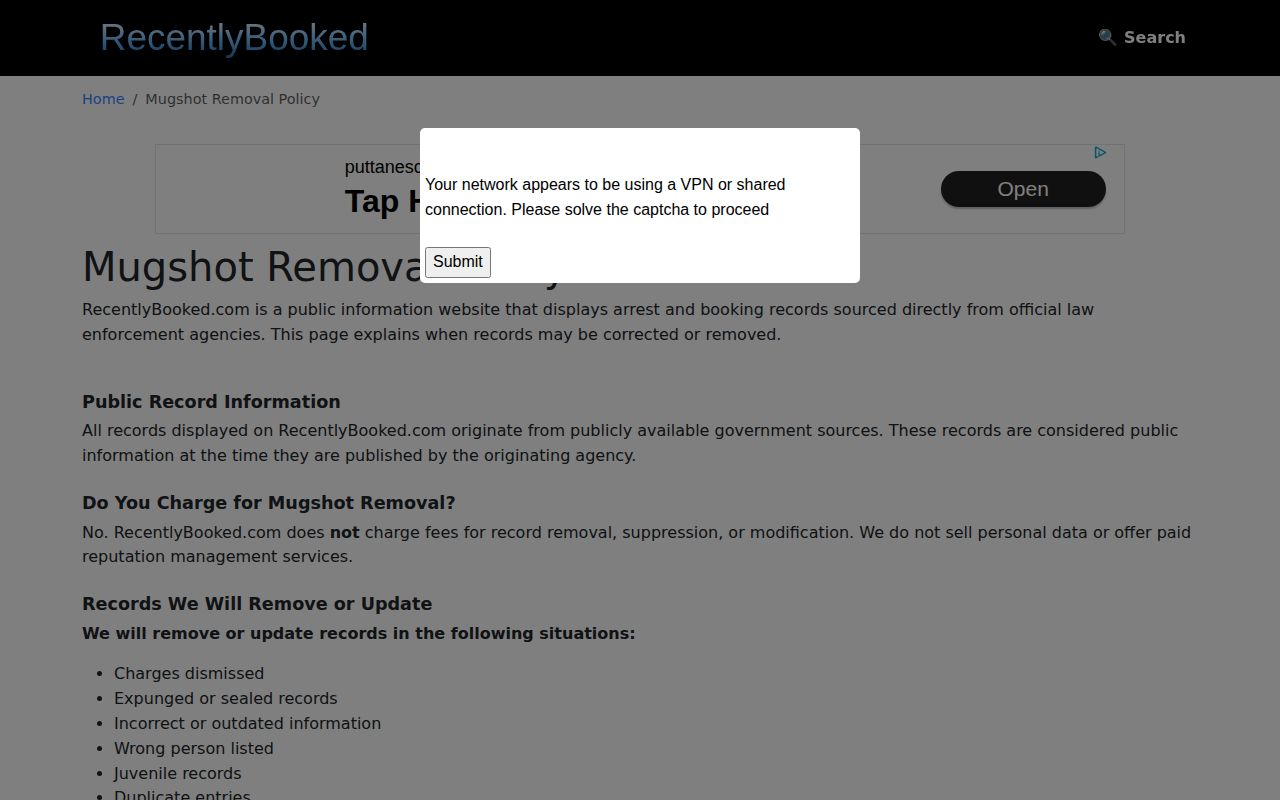
Point your request at one specific copied page. Attach the official outcome or correction record. An unofficial listing can lag behind the agency, so confirm custody and outcome with the government source.
Mugshots.com Tennessee Record Updates
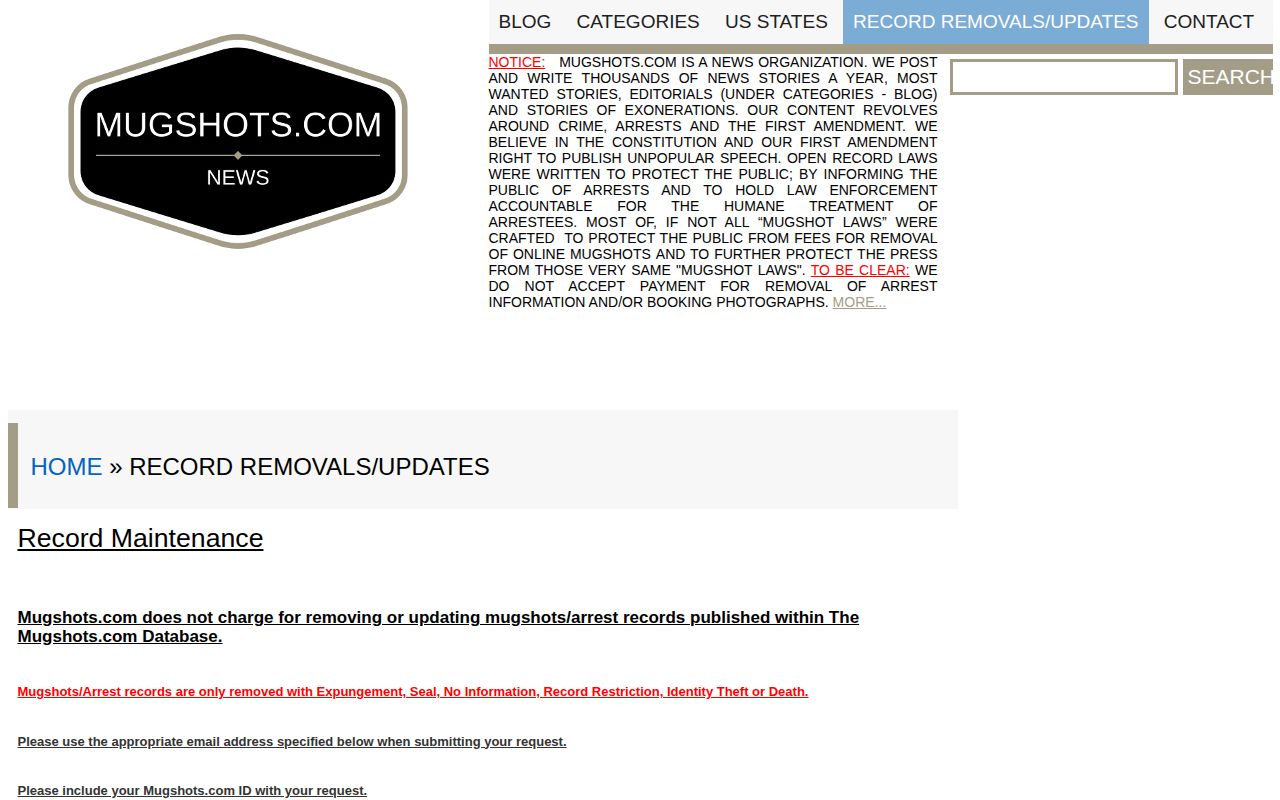
Mugshots.com calls its record-maintenance route free. The policy covers removal when a requester supplies qualifying court papers. Expungement, sealing, no information, restriction, identity theft, and death all qualify. Updates are also possible for favorable dispositions. Satisfied non-favorable dispositions qualify the same way, with the required court record attached. Each request should carry the publisher's record ID. It also needs the supporting document. The policy directs requests to the emails listed on that page. It warns that queues can slow review. A county count or a copied arrest post is not a custody count. It says nothing about a final outcome. The Mugshots.com record-maintenance screenshot lays out the publisher's free update and removal categories.
Send documents only through the publisher's listed route. Keep a copy of what you sent. If the copied page stays the same, check whether the source record changed and whether the publisher ever got the order.
BustedNewspaper Free Removal
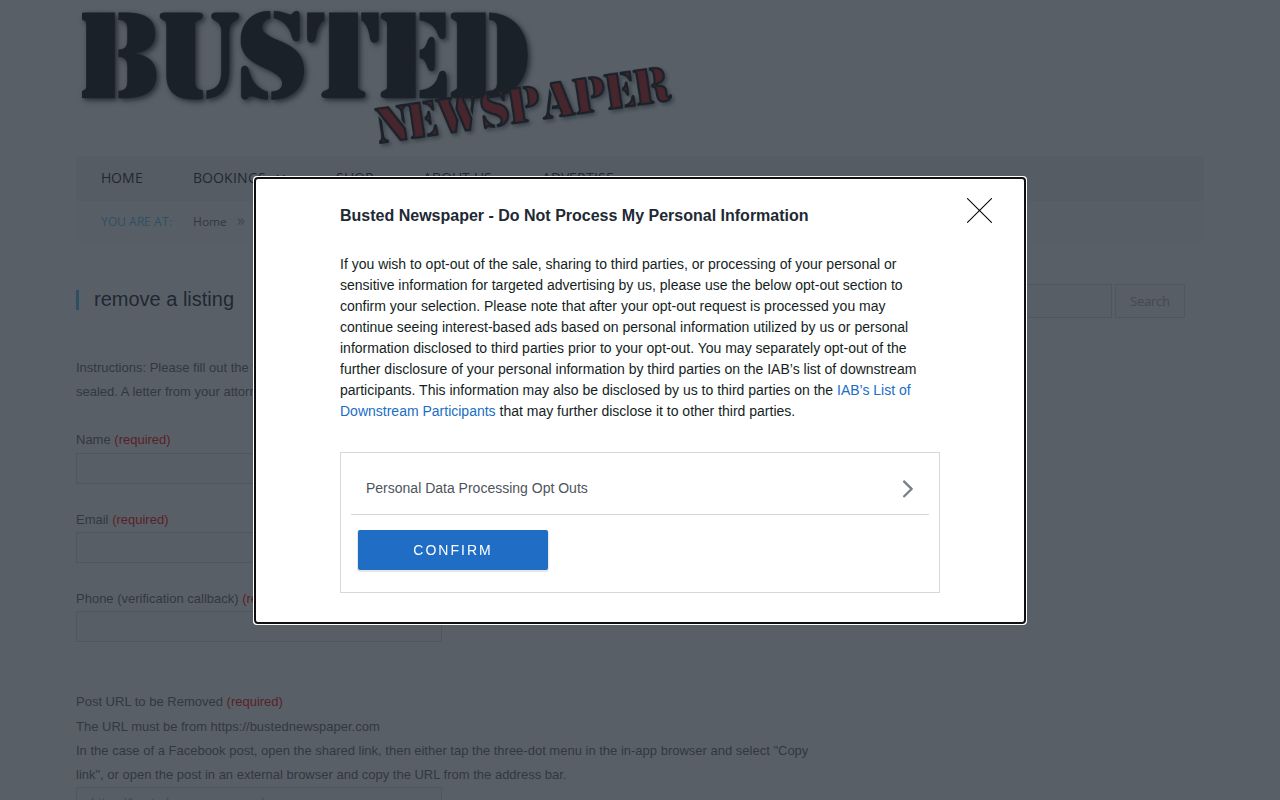
BustedNewspaper's Remove a Listing form wants the listing URL, a name, and contact details. It also asks for a reason plus support. An expungement, a dismissal, nolle prosequi, a not-guilty result, or a sealed record all work. The publisher's page gives verification and removal a window of five to ten days. That is the outlet's own stated timing. Tennessee sets no such legal deadline. The outlet's notice also says its content can change quickly. Treat the page as a copied report rather than a live custody record. The original agency and court remain the sources for the current record. The BustedNewspaper form screenshot shows exactly what it asks for. That goes for anyone requesting a correction or removal.
Use a publisher's own free route when your correction has support. Never pay an intermediary just to file papers that route accepts anyway. No single Tennessee removal process binds every private publisher.